4 October 2026 · 4 min
Italian or English: which suit cut is right for you?
Soft Italian shoulders or a structured English line? How the two cuts differ, which suits your build and your day, and how each wears in Dubai.
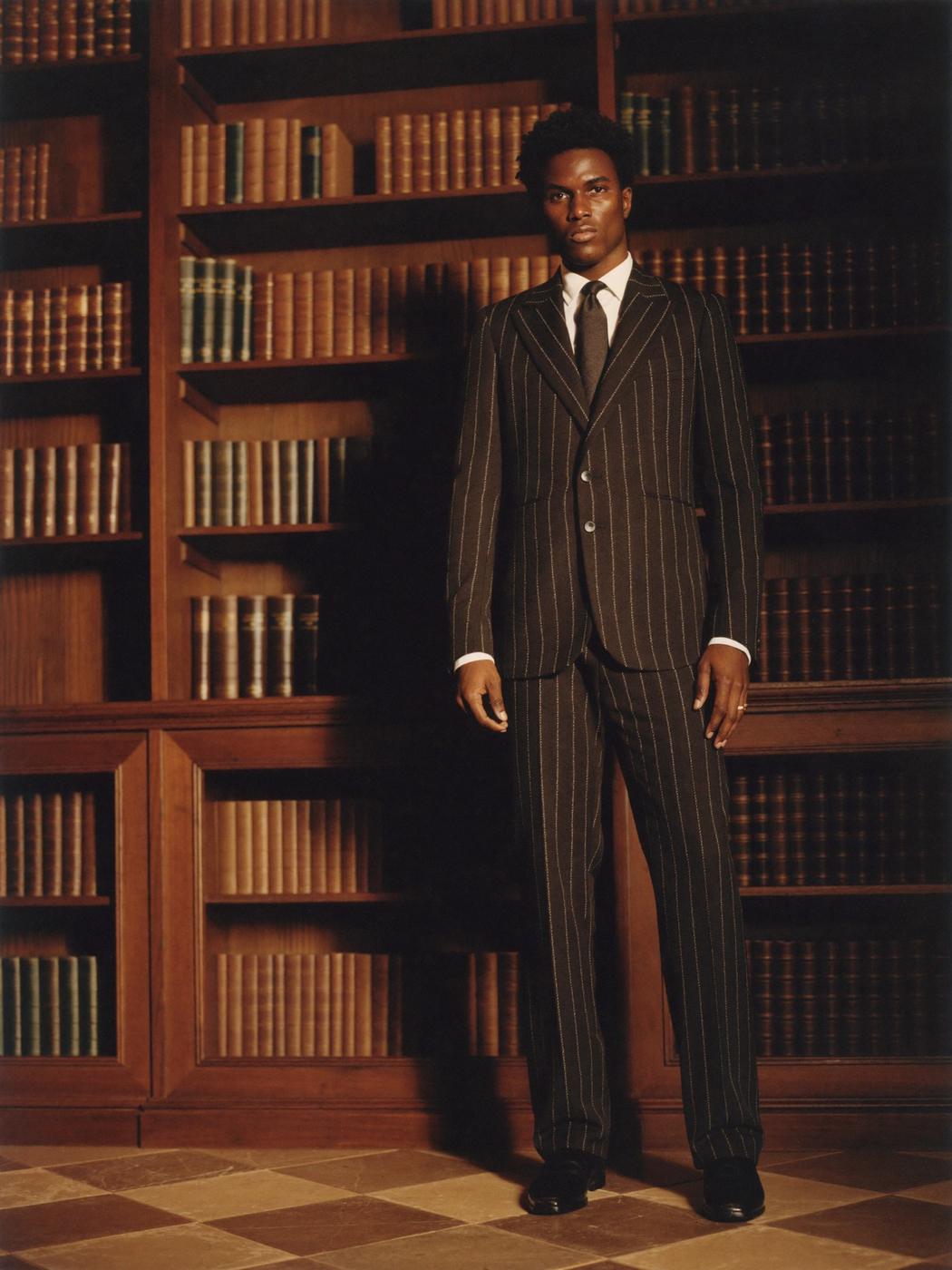
Ask two tailors what makes a good suit and you may hear two different answers. One will talk about structure and a firm, clean line. The other will talk about softness and ease. Those are the English and Italian schools, and most of the difference lies inside the jacket.
Each suits a different build, a different day and a different temperament. Here is how to tell which is yours.
The English cut
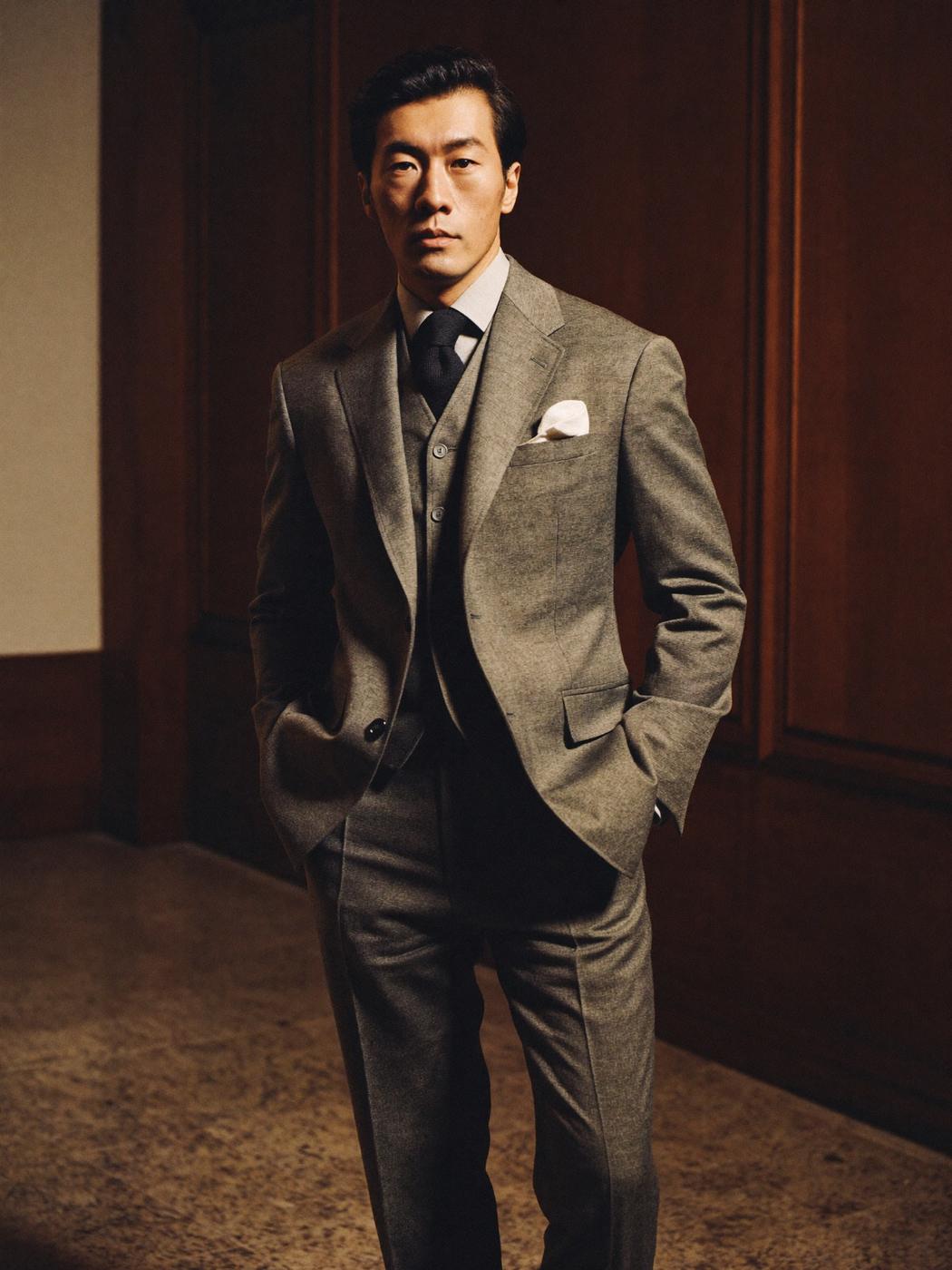
The English suit grew up on Savile Row, shaped by military uniform and riding dress. It is built to hold its own shape.
The shoulder carries a shaped pad, and a roll of wadding lifts the top of the sleeve into a small ridge called roping. A full canvas of wool and horsehair runs from the shoulder to the hem. The waist is drawn in firmly and the skirt flares a little over the hips. The armholes sit high, so you can raise your arm without the whole jacket rising with it.
The details follow the same logic. Deep double vents keep the back clean when you sit. Slanted hip pockets come from the riding coat, and a small ticket pocket often sits above the right one.
The result is sharp, upright and formal. It reads well across a boardroom table and holds its line at the end of a long day. See the English suit.
The Italian cut
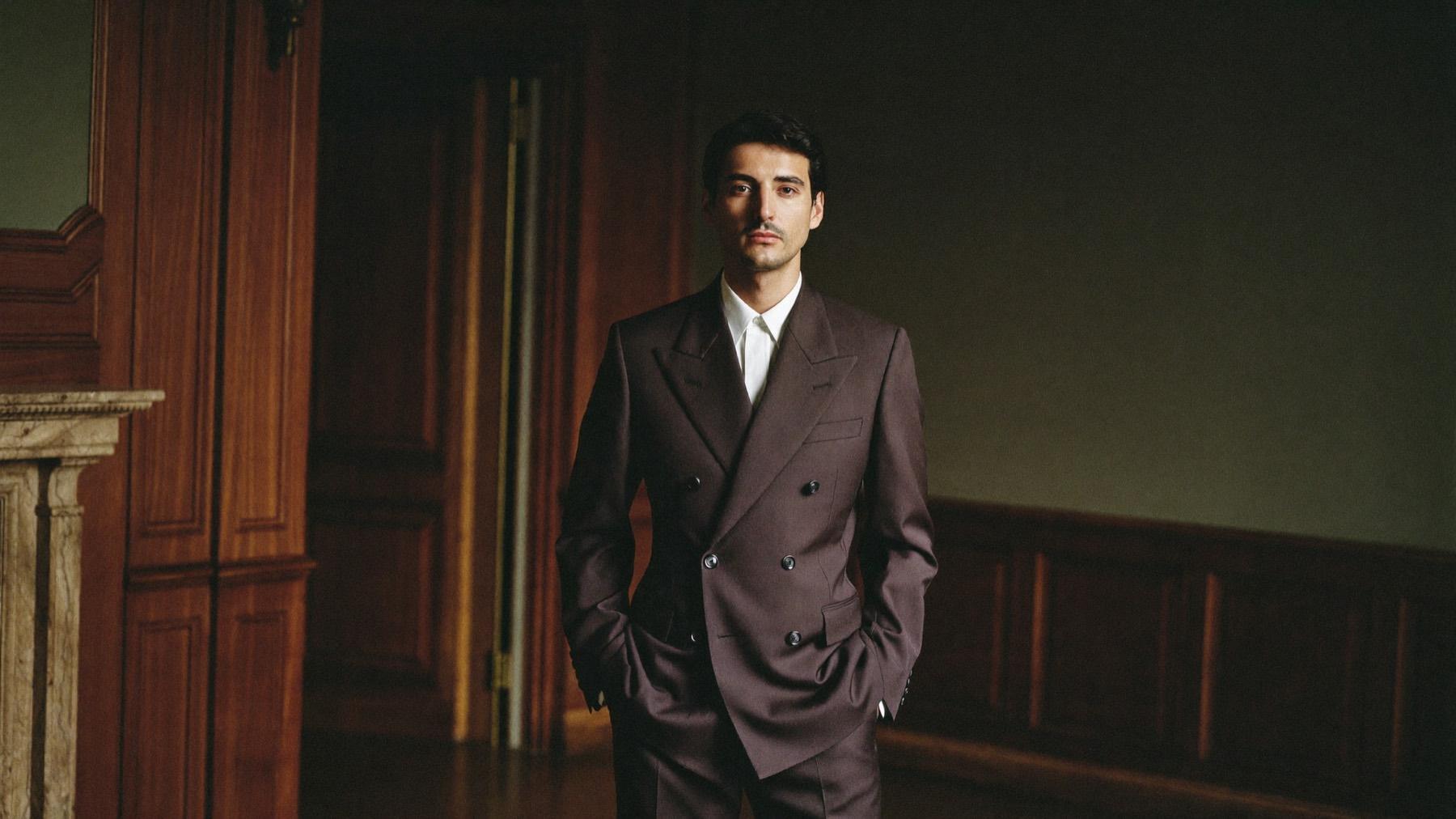
Italy has several tailoring accents. Rome is firmer, Milan sits in the middle and Naples is the softest. When people ask for an Italian suit, they usually mean the softer southern line.
Its shoulder is the spalla camicia. The sleeve is set in like a shirt sleeve, with a slight ripple at the head and little or no padding. A lighter half canvas runs through the chest and lapel only. The gorge, where the collar meets the lapel, sits high, and the lapel rolls long and soft to the button. The breast pocket curves gently upward in a small boat shape, the barchetta.
The jacket follows your body and moves with it. It was cut for a warm city, and it shows. See the Italian suit.
Start with your shoulders
Your own shoulders are the best guide.
If they slope or are narrow, a little padding and roping squares them off and gives the jacket a clean frame. The English cut does this well.
If your shoulders are already broad and square, padding can make you look boxy. A natural Italian shoulder lets your own shape do the work.
Posture matters too. A bespoke pattern is drawn to the way you actually stand, so a dropped shoulder or a forward neck is built in from the start. Either cut can allow for it.
Then think about your day
Consider where the suit will spend most of its life.
For formal meetings, courtrooms and banking floors, the English cut sends a clear message. It looks the same at six in the evening as it did at eight in the morning.
For long lunches, travel and evenings out, the Italian cut is easier to live in. It sits well open, pairs with a knitted tie or none at all, and forgives a day of movement.
Weddings suit both. Peak lapels and a double-breasted front on a soft Italian jacket give presence with ease. A three-piece in the English manner is more formal still.
What about the Dubai heat?
A full canvas adds a little warmth. A half canvas and a half lining let the jacket breathe more freely, so in high summer the Italian build has the edge outdoors.
The fabric matters more than the cut, though. A fine worsted such as Tasmanian Navy from Loro Piana wears comfortably in an English cut for most of the year, especially in air-conditioned offices. For outdoor heat, an open weave such as Camel Hopsack from Drago keeps either cut cooler. Compare weights and weaves in the fabric library.
You do not have to choose one
Bespoke means the choice is yours, detail by detail. You can ask for a natural shoulder with a firmly suppressed waist, or an English jacket with a softer canvas. The trouser can follow either school.
At The Bespoke Corner we settle these points with you at the first consultation, then draw your pattern by hand. The fittings let us check the balance of the jacket on you, so the shoulder, the waist and the lapel roll work together.
If you are weighing one cut against the other, the simplest test is to see both. Book a consultation in our Business Bay showroom, or ask us to bring the fabric books to your home or office, and we will show you each cut and talk through which one suits you.