4 October 2026 · 4 min
Bespoke, made-to-measure or off the rack: what is the difference?
Bespoke, made-to-measure and off the rack explained: how each suit is patterned, fitted and built, and five questions to ask any tailor in Dubai.
In Dubai, the words bespoke and made-to-measure are often used as if they meant the same thing. They describe different ways of making a suit, and the difference shows in the fit, the feel and how long the suit lasts.
It comes down to three things: where the pattern comes from, how often the suit is fitted on you, and how it is built inside.
Off the rack
A ready-made suit is cut from a standard pattern, called a block, drawn for an average figure in each size. It is sewn in quantity and sold finished.
You can have it altered after you buy it. Sleeves can be shortened, trousers hemmed and the waist taken in or let out a little. The shoulders and the balance of the jacket, the way it hangs from front to back, are very hard to change. If the shoulders fit you, a good ready-made suit can serve you well. If they do not, no alteration will fully fix it.
Most ready-made jackets have a fused front, where the interlining is glued to the fabric. It is quick to make and keeps the cost down. Over time, with heat and cleaning, the glue can loosen and the front can bubble.
Made-to-measure
Made-to-measure also starts from a block. A fitter takes your measurements, sometimes with a sample jacket for you to try on, and the block is adjusted: a longer sleeve, a wider chest, a fuller seat. The suit is then made, usually in a factory, in the fabric and details you chose.
You get a better fit than off the rack, and a choice of fabric, lapel, pockets and lining. There is usually one fitting once the suit is made, and sometimes none before it is finished.
The limit is the block. It can be adjusted, but only so far. For a regular build that is often enough. For a dropped shoulder, a forward stance or a strong athletic build, the adjustments can run out.
Bespoke
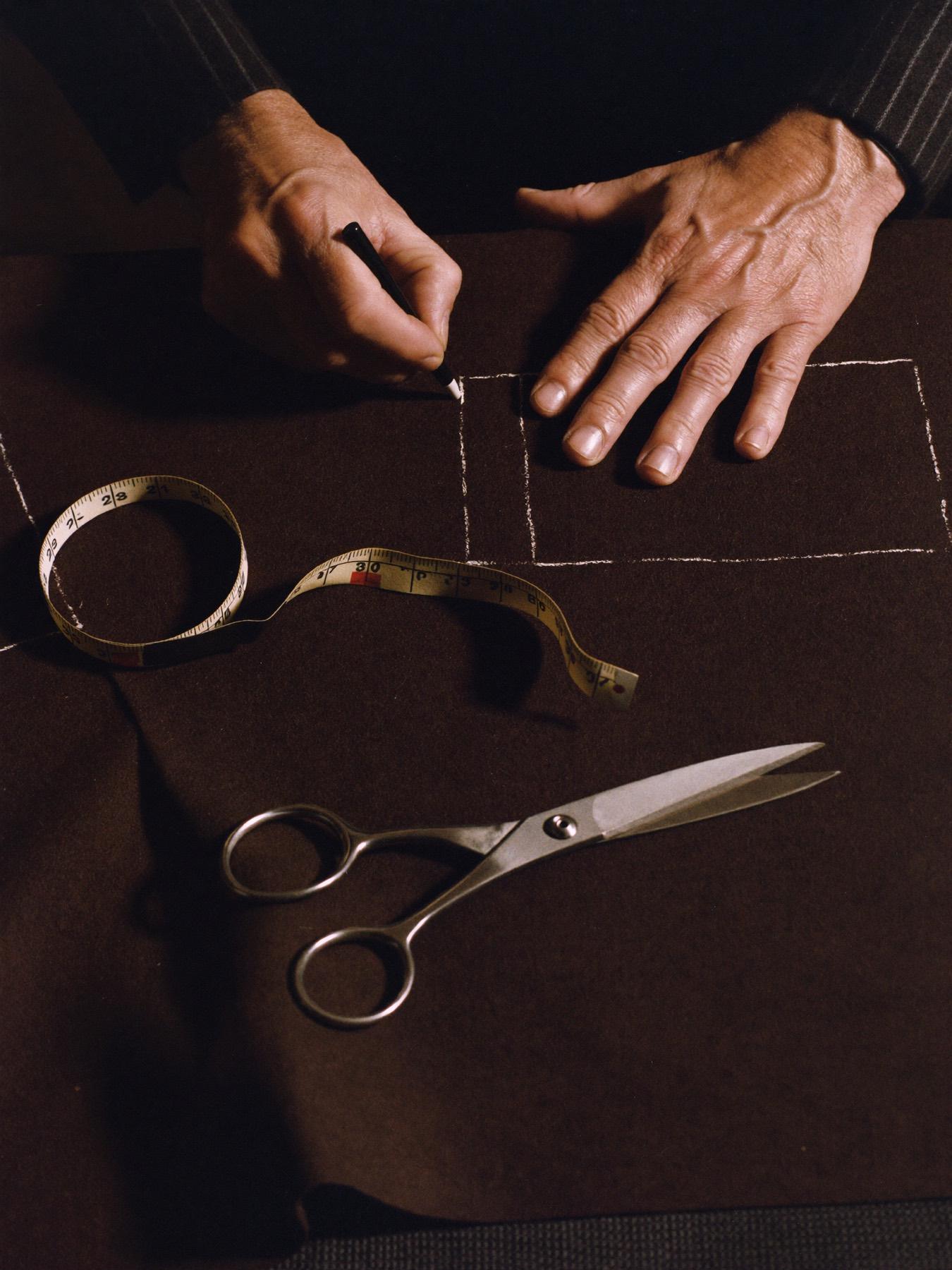
A bespoke suit starts with a blank sheet. The cutter takes your measurements and studies how you stand: the slope of each shoulder, the set of your neck, the curve of your back. A pattern is drafted from scratch for your body alone, and the fabric is cut from it.
The suit is then fitted several times as it is made. At the basted fitting, the jacket is held together with loose white tacking stitches, so the tailor can take it apart and recut it. At the forward fitting the jacket is closer to finished, with the collar and sleeves in place, and the fit is refined again. The final fitting checks the finished suit.
Inside, the front is built on a canvas that floats free of the fabric, either a full canvas or a half canvas in the chest. It moulds to you as you wear it.
The word comes from bespeak. In the old tailoring houses, the fabric for a suit was said to be spoken for by the customer. Even in Britain the word has no protected meaning: in 2008 the UK advertising regulator dismissed a complaint from Savile Row tailors about its use for suits cut and sewn by machine. So it is worth asking what a tailor means by it.
Five questions to ask any tailor
- Is a new pattern drawn for me, or is a standard one adjusted?
- How many fittings are there, and is the first one basted?
- Who cuts the fabric, and where?
- Is the front canvassed or fused?
- Will you keep my pattern for the next suit?
The answers tell you which of the three you are buying.
Which is right for you?
Off the rack makes sense if a standard size fits your shoulders and you need a suit quickly. Made-to-measure suits a regular build that wants more choice of fabric and detail. Bespoke is worth it if your build sits outside the standard sizes, if comfort through a long day matters to you, or if the occasion calls for something made for you alone, such as a wedding sherwani or a tuxedo.
How we work
At The Bespoke Corner every suit starts with a consultation. You choose your fabric from the mill books of Loro Piana, Zegna, Scabal, Reda, Drago, Cerruti, Guabello, Thomas Mason and others, in our Business Bay showroom or at your home or office. Your pattern is drawn by hand, and the suit is fitted three times: basted, forward and final. Browse the cuts in the catalog, from the English suit to the Italian suit.
If you are unsure which route suits you, come and see the difference for yourself. Book a consultation and we will talk you through the fabric, the cut and the fittings before a single line is drawn.