4 October 2026 · 4 min
Sherwani or bandhgala: what to wear to each wedding ceremony
Sherwani, bandhgala or Indo-western? What men wear to the mehndi, the sangeet, the ceremony and the reception at a South Asian wedding in Dubai.
A South Asian wedding is rarely a single event. It is a run of celebrations over several days, and each has its own mood and its own dress. In Dubai, many of them fall in the cooler months.
Customs differ between Hindu, Muslim and Sikh families, and from region to region. Read the invitation, and if in doubt, ask the family. The broad pattern holds, though: lighter and brighter early on, most formal at the ceremony, and sharp and polished at the reception.
The sherwani and the bandhgala
The main difference is length.
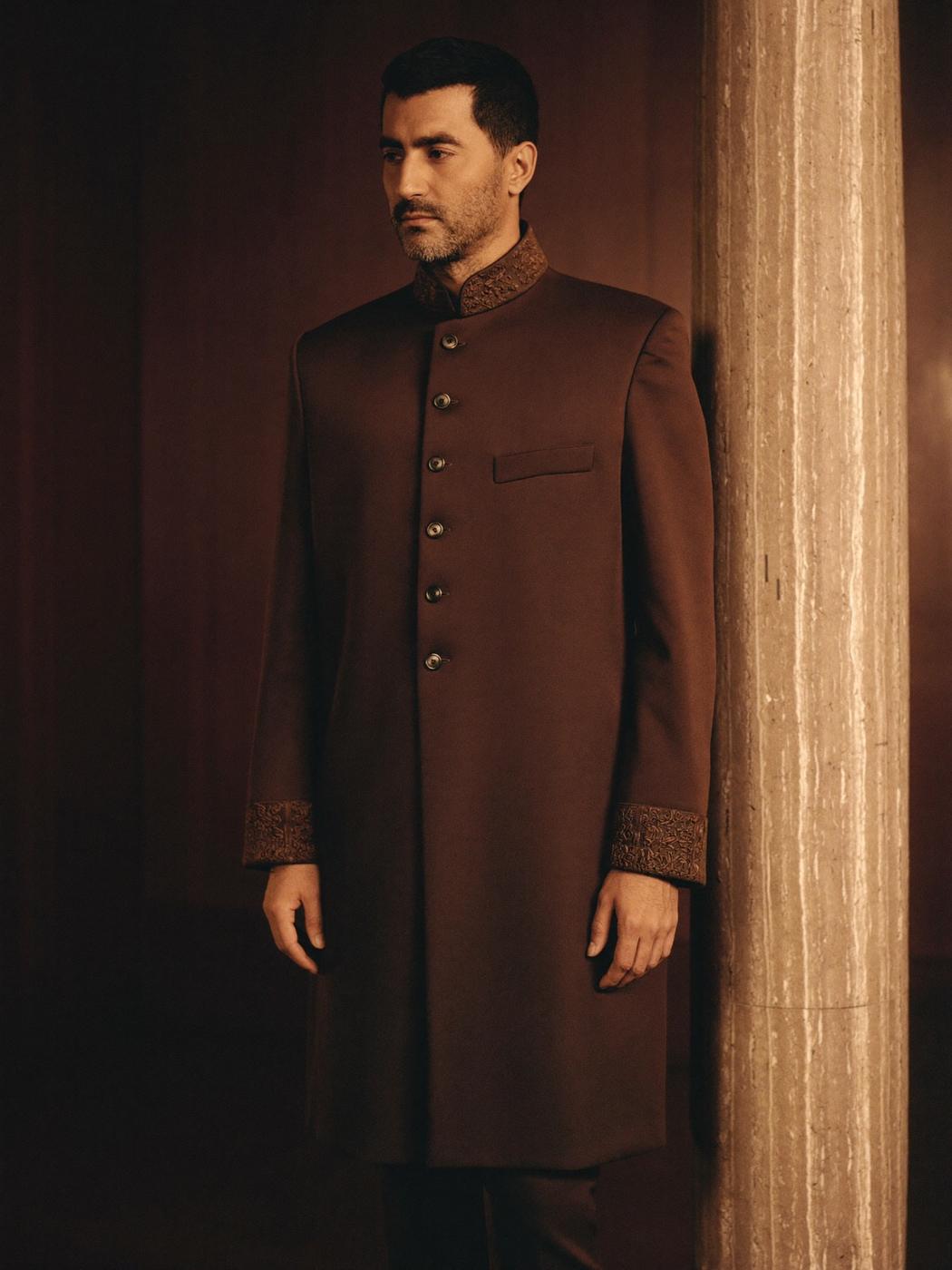
A sherwani is a long coat with a standing collar that reaches the knee or below. It is worn over a kurta, with churidar or straight trousers, and it is the groom’s garment for the wedding day itself.
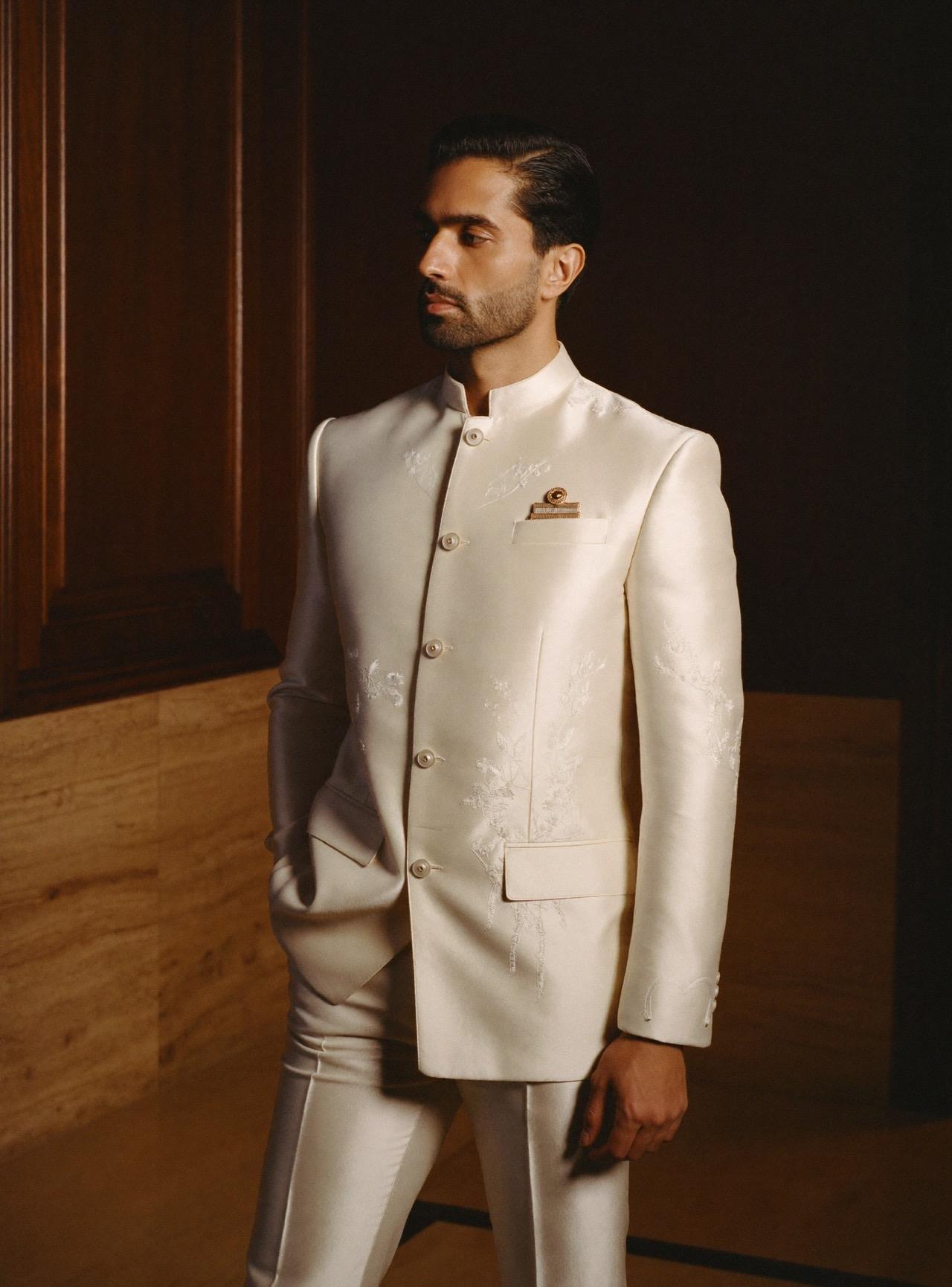
A bandhgala, also called the Jodhpuri jacket, ends at the hip. It is cut like a suit jacket with a closed collar in place of lapels, and is often worn with matching trousers. It suits the groom at the sangeet or the reception, and guests at almost every event.
The achkan sits between the two: a long coat, usually a little shorter and closer to the body than a sherwani.
The mehndi
The mehndi is when henna is applied to the bride’s hands and feet. It is relaxed and colourful, often held in the afternoon or early evening, and in many families it becomes a long party. Some families also hold a haldi, when turmeric paste is applied to the couple.
Dress lightly and brightly. A kurta in cotton or linen, with a waistcoat or a short jacket, is the usual choice, in yellow, green, saffron or soft pastels. Keep the sherwani for later. Henna and turmeric both stain, so wear nothing precious.
If you prefer Western dress, a linen suit worn with an open collar fits the mood.
The sangeet
The sangeet is the night of music and dance, often on the eve of the wedding. Families perform, friends join in and everyone dances.
This is the bandhgala’s evening. It is dressier than a kurta, and it moves freely. Jewel tones, ivory and deep colours all work, and the buttons set the tone: brass or enamel for a festive look, covered buttons for a quiet one. Tell your tailor you plan to dance. A higher armhole lets you raise your arms without the jacket lifting.
The sangeet is also where Indo-western dress is most at home. It mixes the two traditions: a long jacket over slim trousers, an asymmetric front, a draped kurta. Follow the family’s lead on how far to go.
The ceremony
This is the most formal day and the most sacred. A Hindu wedding centres on the pheras around the sacred fire, at a time chosen as auspicious. A Muslim wedding centres on the nikah, and in Pakistani families on the barat, when the groom arrives with his party. A Sikh wedding, the Anand Karaj, usually takes place in the morning at the gurdwara, where everyone covers their head and removes their shoes.
For the groom, this is the day for the sherwani. It is often ivory, gold, cream or a deep jewel tone, worn with a stole over one shoulder, a safa or turban, and embroidered mojari. Ivory Raw Silk, slubbed with a soft lustre, is our wedding fabric. If you will sit on a low seat or on the floor through long rituals, say so at your fittings, so the vents and the ease are cut for it.
Guests should dress well and stay a step below the groom. A bandhgala, or a kurta with a jacket, is right. At many Hindu ceremonies guests avoid head-to-toe white, which is linked to mourning, and black, which some families see as inauspicious. Red usually belongs to the bride.
The reception
The reception is an evening party, often in a hotel ballroom, and it is the most Western of the events. In Muslim families the walima, hosted by the groom’s family after the nikah, plays a similar part.
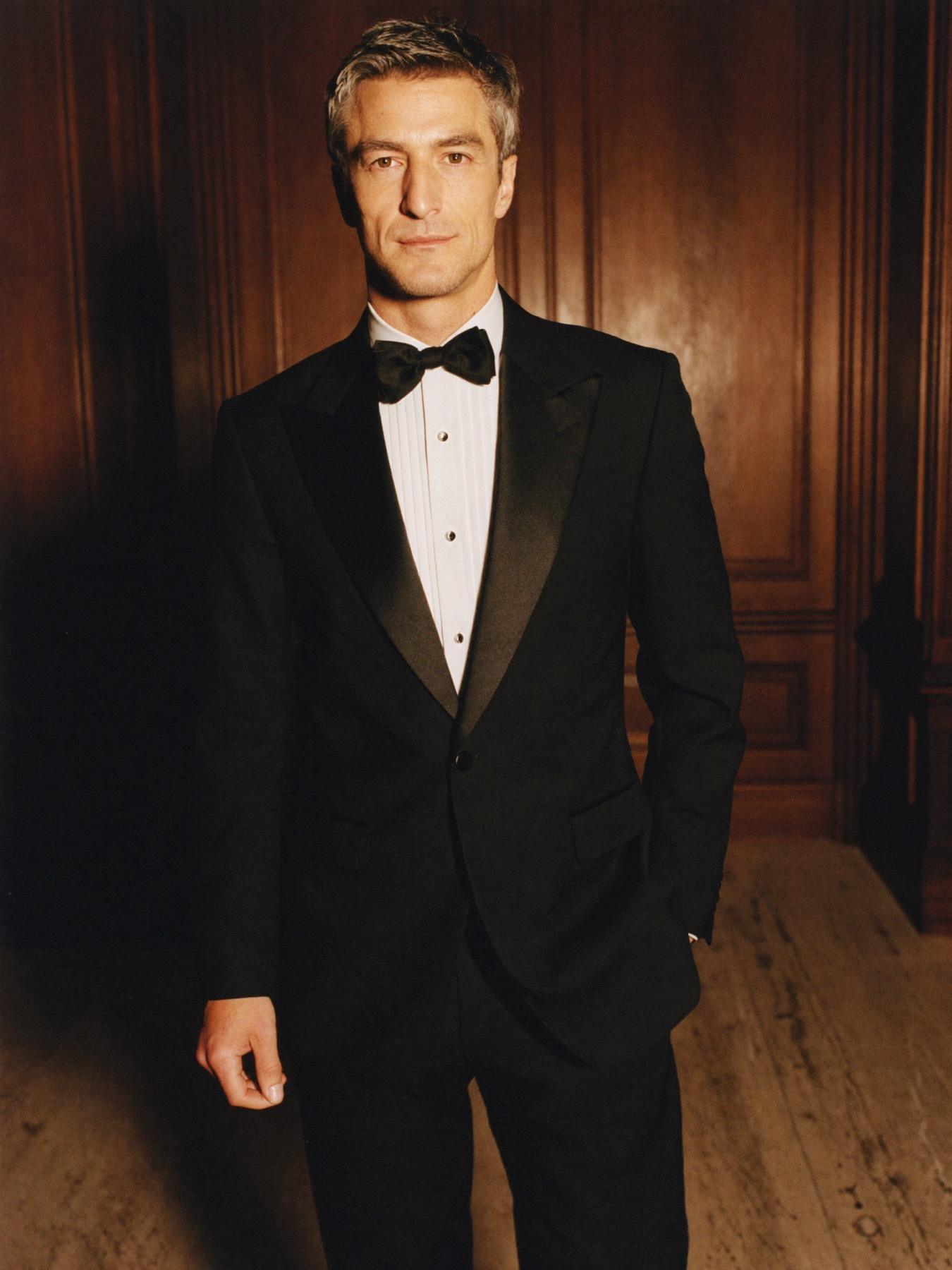
Many grooms change out of the sherwani here. A bandhgala in Midnight Barathea is formal enough for any evening, and a tuxedo answers a black-tie invitation. Guests can wear a dark suit or a bandhgala, or black tie if the card asks for it.
Plan the wardrobe as a set
For a groom, the outfits work best when they are planned together, so the colours build across the week and sit well beside the bride’s. Bring a swatch or a photograph of her outfits to the consultation. Come early in the wedding season and tell us the dates, and we will plan the the fittings around them. Bring the shoes you will wear, so the trousers fall correctly.
Book a consultation in our Business Bay showroom, or ask us to bring the fabric to your home, and we will plan the whole week with you, from the mehndi to the reception.